How Google Uses Backlinks to Rank Pages
Most people know Google “uses backlinks” to rank pages — but what does that actually mean under the hood? Understanding how Google reads and weighs links is what separates effective link building from guesswork, because it tells you exactly which links help and which do nothing. This guide explains, without the jargon, how Google uses backlinks to decide what ranks. For the basics first, see what backlinks are; for the full strategy, see our complete guide to backlinks.
It started with PageRank
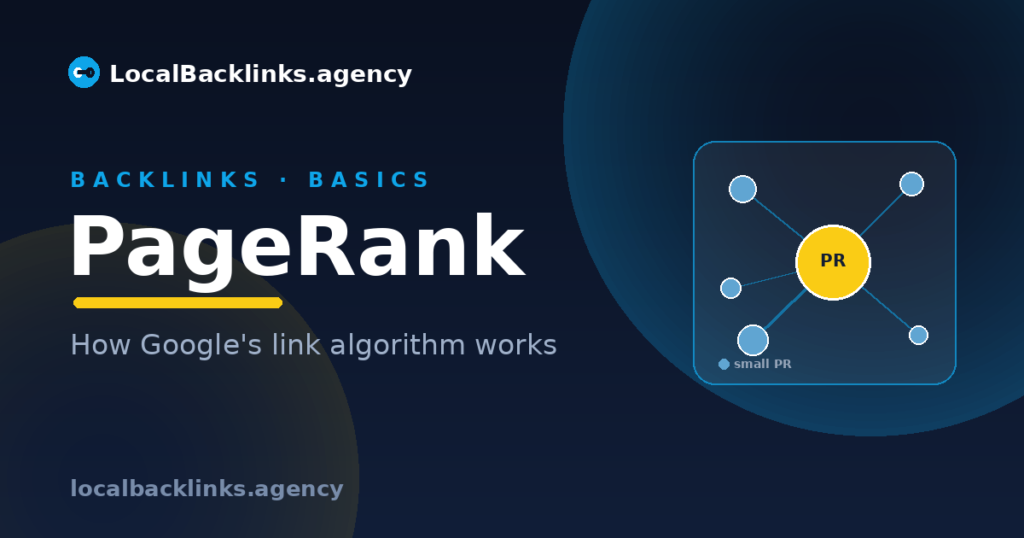
Google’s original breakthrough was an algorithm called PageRank, which treated a link as a vote. The clever part wasn’t just counting votes — it was that votes from important pages counted for more than votes from obscure ones, and that importance flowed through the web’s links. A link from a highly-linked page passed more value than a link from a page nobody linked to.
This is why, even today, a single link from an authoritative site can outweigh many links from weak ones. Modern Google is vastly more sophisticated than early PageRank, but the foundational idea — that authority passes through links, and not all links carry equal weight — still underpins how it uses backlinks. We go deeper in PageRank explained.
How authority passes through links (link equity)
When one page links to another, it passes along some of its authority — often called link equity or “link juice.” How much flows depends on several things: how authoritative the linking page is, how many other links sit on that page (the value is shared among them), how relevant the link is, and where it sits in the content. A link from a strong, relevant page placed in the main body passes far more than a link buried in a footer on a weak page. This is also why your own internal links matter — they pass equity around your site. We cover this fully in link equity.
Google judges relevance, not just authority
A common misunderstanding is that Google only cares how powerful a linking site is. It cares just as much about how relevant it is. A link from a site about your topic tells Google what your page is about and that experts in your field vouch for it — a strong, contextual signal. A link from an unrelated site, however authoritative, sends a weaker and sometimes confusing message. This is why relevance is one of the most important quality factors in link building; see link relevance.
Anchor text gives Google clues
Google also reads the anchor text — the clickable words a link is wrapped in — as a hint about what the linked page is about. If relevant sites link to your page using natural, topic-related phrasing, that reinforces your relevance for those topics. But because anchor text is a signal, it’s also abused: an unnatural pattern of exact-match keyword anchors is one of the clearest manipulation flags Google looks for. A natural mix, dominated by branded and generic anchors, is what looks earned. More in our anchor text guide.
Google evaluates trust and quality, too
Beyond authority and relevance, Google assesses how trustworthy the linking site and the link itself are. Links from clean, credible sites with genuine traffic and sensible outbound profiles are treated very differently from links on spammy, link-selling sites. A high-authority site with a junk backlink profile is worth less than its raw metrics suggest. This is the idea behind trust-based metrics like Majestic’s Trust Flow, and it’s why a real, trusted site beats a manufactured one — see link trust.
How Google handles manipulative links now
This is the part that has changed most. For years, manipulation worked — until Google’s Penguin update began targeting spammy link profiles, later becoming part of the core algorithm and evaluating links in real time. Today, Google’s AI-driven spam system (SpamBrain) is very good at identifying unnatural links and simply neutralising them — they stop passing value rather than always triggering a visible penalty. In serious cases, a manual action can hit a site directly.
The practical takeaway: Google increasingly just ignores links it judges manipulative. So building piles of irrelevant, low-quality links isn’t only risky — it’s often pointless, because those links never count in the first place. The links that work are the ones that look genuinely earned. We cover staying on the right side of this in white-hat vs black-hat link building.
What this means for your link building
Put it all together and Google’s use of backlinks points to one strategy:
- Relevance first — links from sites genuinely related to your topic.
- Real, trusted sites — with genuine traffic and clean profiles, not inflated metrics.
- Natural anchors — branded-led, exact-match rare.
- Genuine placement — in real content, not footers or spam.
- Quality over quantity — a few strong links beat many weak ones.
That’s not a coincidence — it’s the direct consequence of how Google actually reads links. Our overview of how to get backlinks turns it into practical methods, or our link building services handle it for you.
FAQ
How does Google use backlinks to rank pages?
Google treats links as votes that pass authority (PageRank), reads relevance and anchor text to understand what a page is about, and assesses the trust of the linking site — combining these to help decide rankings.
Does Google count every backlink?
No. Google ignores or devalues links it judges manipulative, irrelevant or spammy, so many low-quality links never pass value at all.
How does Google detect bad backlinks?
Through algorithmic systems like SpamBrain (the successor to Penguin) that identify unnatural patterns — irrelevant links at scale, over-optimised anchors and link-network footprints — and neutralise them.
Does anchor text affect how Google uses a link?
Yes — anchor text helps Google understand what the linked page is about. Natural, varied anchors help; an unnatural pile of exact-match keywords is a manipulation signal.
How do backlinks work?
A backlink is a link from another website to yours. Search engines follow it to discover your page, and Google treats it as a signal that the linking site vouches for your content. How much a single link is worth depends on the authority and relevance of the linking page, its anchor text and whether it is a followed link. Links that Google judges manipulative are ignored rather than counted.
In summary
Google uses backlinks by treating them as votes that pass authority through the link graph, while judging relevance, anchor text and trust to decide how much each link really counts — and increasingly ignoring the ones that look manipulated. The strategy this rewards is consistent: relevant, real, trusted, naturally-placed links, quality over quantity. Want the complete picture? Read our complete guide to backlinks, or get a free plan for building links Google actually counts.


Leave a Reply